

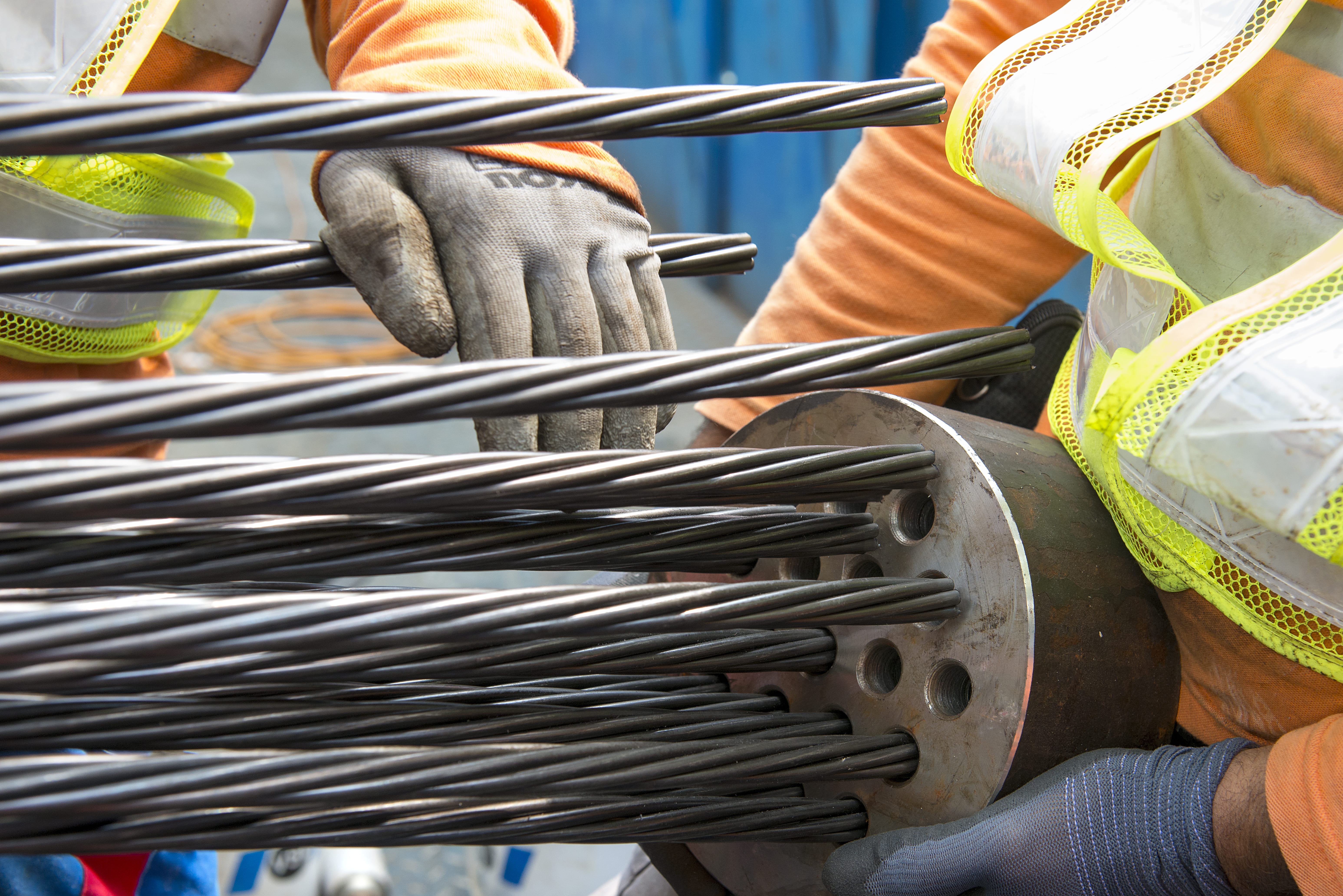
Post-Tensioning for bridges
Post-tensioning for longer spans and durable bridges
Post-tensioning is a key technique in modern bridge construction, enabling longer spans, slender structures, and enhanced durability under dynamic loads. Beyond system supply, VSL brings proven expertise in post-tensioning design to ensure optimized structural behavior and long-term performance. From large cable-stayed bridges to multi-span viaducts and railway overpasses, VSL’s post-tensioning solutions are trusted for their reliability, technical performance, and adaptability to diverse bridge types and site conditions.
Why post-tensioning matters for bridges
Post-tensioned tendons provide active reinforcement, allowing bridges to span greater distances with reduced structural depth. This improves clearance, reduces the number of supports, and optimizes material usage.
In bridge applications, post-tensioning minimizes long-term deformation, deflection, and crack propagation due to heavy traffic loads and environmental conditions.
Post-tensioning makes it possible to realize innovative bridge geometries, including curved, inclined, or cable-stayed configurations, without compromising safety or service life.
VSL’s post-tensioning services
In the early 1950s, VSL was a pioneer of post-tensioning (PT) and since then, this has been at the very heart of VSL’s expertise.
Engineering support and system design
• Feasibility studies and construction method development
• Integration with segmental, in-situ, and precast bridge structures
Supply of certified systems
• High fatigue-resistant anchorages for railway, highway, and seismic applications
• Corrosion protection systems tailored to exposure class and project duration
Precast and on-site installation and stressing
• Specialist equipment and supervision for complex site constraints
• Use of lightweight, modular form travelers for cantilever construction
Inspection, repair, and strengthening
• Replacement or re-stressing of tendons during bridge rehabilitation projects
• Strengthening solutions using external post-tensioning or FRP systems
Why consider external tendons in bridge design?
External post-tensioning supports both serviceability and structural performance objectives. With its XT external tendon range, VSL sets a new standard by addressing the full tendon lifecycle. XT tendons:
- feature mechanically independent strands
- prevent load redistribution in the event of strand failure
- allow early detection via monitoring or visual inspection.
This controlled behavior enables timely inspection and targeted repair, including single-strand replacement without traffic interruption, and enhances safety and long-term structural performance.
Why choose VSL for post-tensioned bridge solutions?
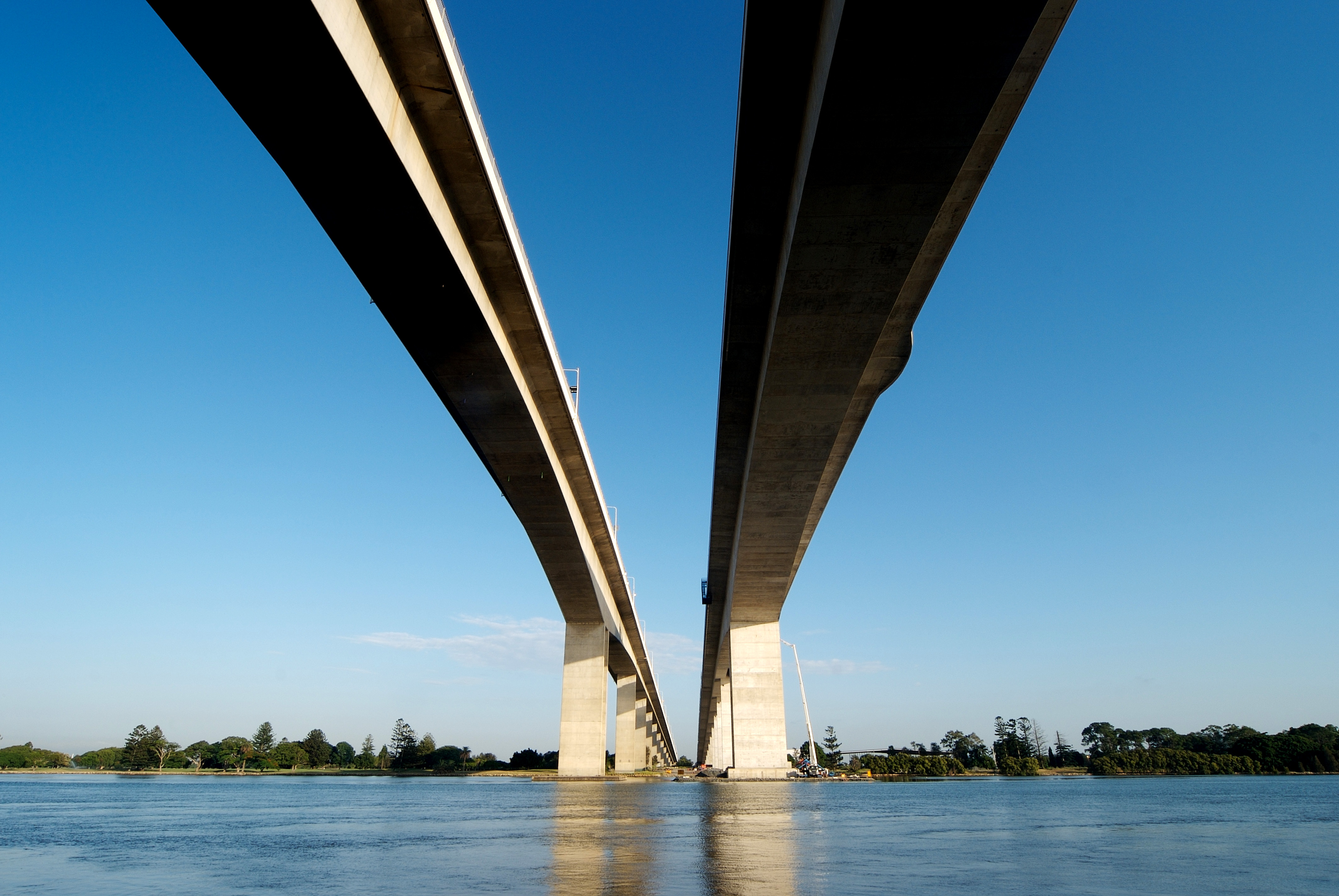
Global leader in post-tensioned bridge solutions
With 70 years of experience in bridge construction, VSL is recognized for delivering technically advanced and site-adapted post-tensioning systems across all continents.Proven systems for all bridge types
From cast-in-place box girders to precast segmental viaducts and stay-cable bridges, VSL systems are used in all major bridge typologies and comply with international codes.Execution expertise in complex environments
VSL supports clients through all project phases, offering end-to-end services even in geologically or logistically challenging settings, from mountain valleys to desert rail corridors.
FAQ about post-tensioning in bridge construction
Post-tensioning increases span length, reduces structural depth, and improves durability. It allows for innovative designs and more efficient material use.
Yes. VSL systems are compatible with segmental precast, cast-in-place, and balanced cantilever bridge types.
VSL applies rigorous quality procedures including tendon testing, grouting validation, stress control, and complete traceability documentation.