

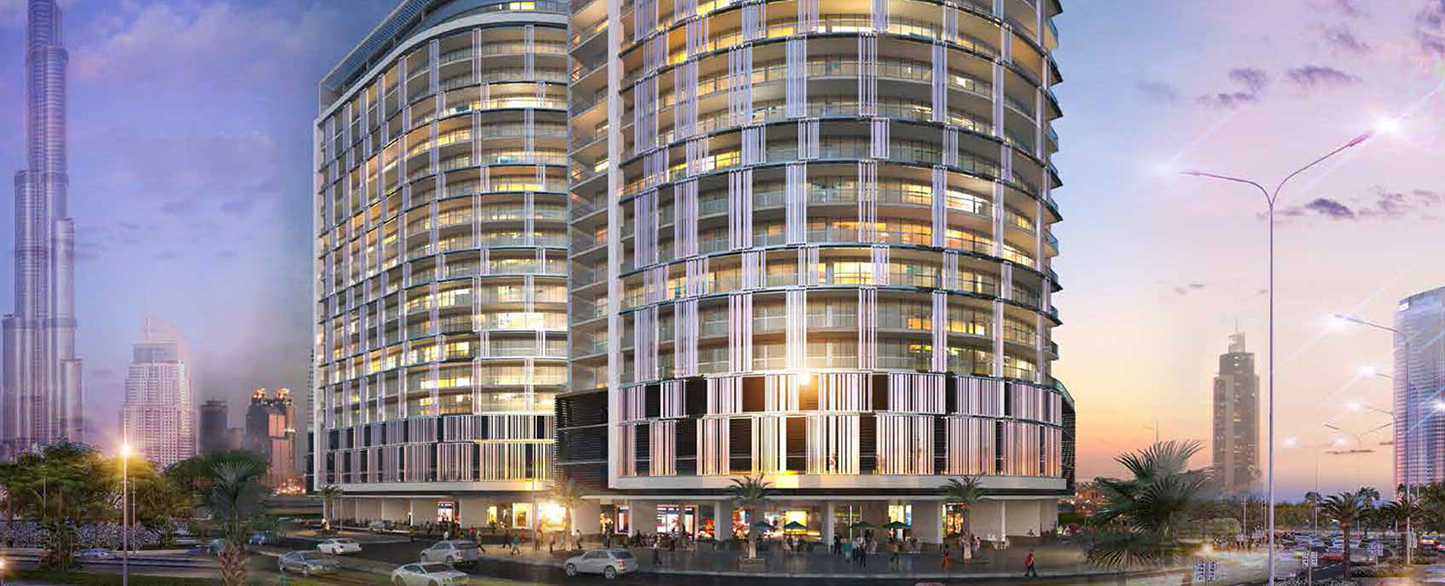
Ground Improvement for Buildings
Safe and cost-effective construction on challenging soils
Ground improvement techniques are essential for enhancing the load-bearing capacity and stability of soils that do not meet the requirements for direct construction. VSL provides tailored ground improvement solutions that allow buildings to be safely and economically constructed on challenging soils, while minimizing the need for deep foundations. These solutions are especially valuable in areas with loose, compressible, or liquefiable ground conditions.
The role of ground improvement in building construction
Ground improvement methods modify in-situ soil properties to increase strength, reduce compressibility, and control settlement. This enables the use of shallow foundations even on problematic soils.
Soft clays, loose sands, or fill materials can pose challenges to conventional construction. Ground improvement allows these sites to be developed safely without resorting to costly deep foundations.
Some techniques, such as stone columns or dynamic compaction, can reduce the risk of soil liquefaction, increasing seismic resilience for building foundations.
VSL’s ground improvements services
VSL delivers tailored ground improvement solutions that strengthen soil performance and secure foundation design from the outset.
Design and engineering
• Design of treatment grids and layout
• Performance-based specifications aligned with project needs
Ground improvement techniques
• Dynamic Compaction: Repeated surface impacts densify granular soils at depth.
• Controlled Modulus Columns (CMC): Rigid inclusions improve load distribution in soft ground.
• Vertical Drains and Preloading: Accelerate consolidation of saturated clays.
• Jet Grouting: High-pressure injection creates cement-treated soil columns.
Monitoring and quality control
• Validation of improvement effectiveness through pre- and post-treatment analysis
• Continuous supervision by VSL experts
Why choose VSL for ground improvement?
Ground-structure integration
As a company specialized in both geotechnical and structural engineering, VSL delivers fully integrated solutions that optimize foundation behavior from below ground to above.Tailored solutions for complex geologies
Whether addressing variable fill, compressible soils, or sites with environmental restrictions, VSL adapts methods and equipment to the specific project conditions.Global experience and innovation
VSL has successfully implemented ground improvement solutions worldwide, from urban high-rise projects to large-scale industrial and infrastructure developments.
FAQ about Ground Improvement
Ground improvement is often more cost-effective, less disruptive, and faster to implement than deep foundations, especially when only moderate bearing capacity is needed.
The choice depends on soil conditions, structural loads, site constraints, and performance requirements. VSL performs site-specific analyses to identify the most appropriate technique.
Yes. VSL frequently integrates ground improvement with foundation design, retaining structures, and slab-on-grade solutions for a unified approach.