

Inspection and Assessment of Marine Structures
Assess Early, Act Wisely
Marine environments accelerate deterioration, often invisibly. Early, accurate diagnostics are essential to ensure the safety, functionality, and longevity of coastal and offshore assets.
VSL provides comprehensive inspection and assessment services for marine structures. We help asset owners and operators detect issues early, plan maintenance or upgrades effectively, and comply with evolving safety and environmental compliance standards.
Our inspection & assessment services
above and below water, including confined space access
ultrasonic testing, impact echo, GPR, delamination surveys
chloride profiling and reinforcement condition evaluation
severity assessment, ‘whole structure’ analysis, propagation assessment
including sensors and real-time data systems
for advanced modeling and progressive asset tracking

Innovative Partnerships
We use advanced technologies to go beyond surface-level observations, which is critically important in marine environments where damage can be hidden.
Through partnerships with innovators like Bridgology (GPR-based risk mapping) and GScan (muon tomography), VSL offers state-of-the-art diagnostic solutions that minimize intrusion and improve reliability, even in submerged or difficult-to-access locations.
Why choose VSL for the inspection and assessment of marine structures?
Field-proven in marine-exposed conditions
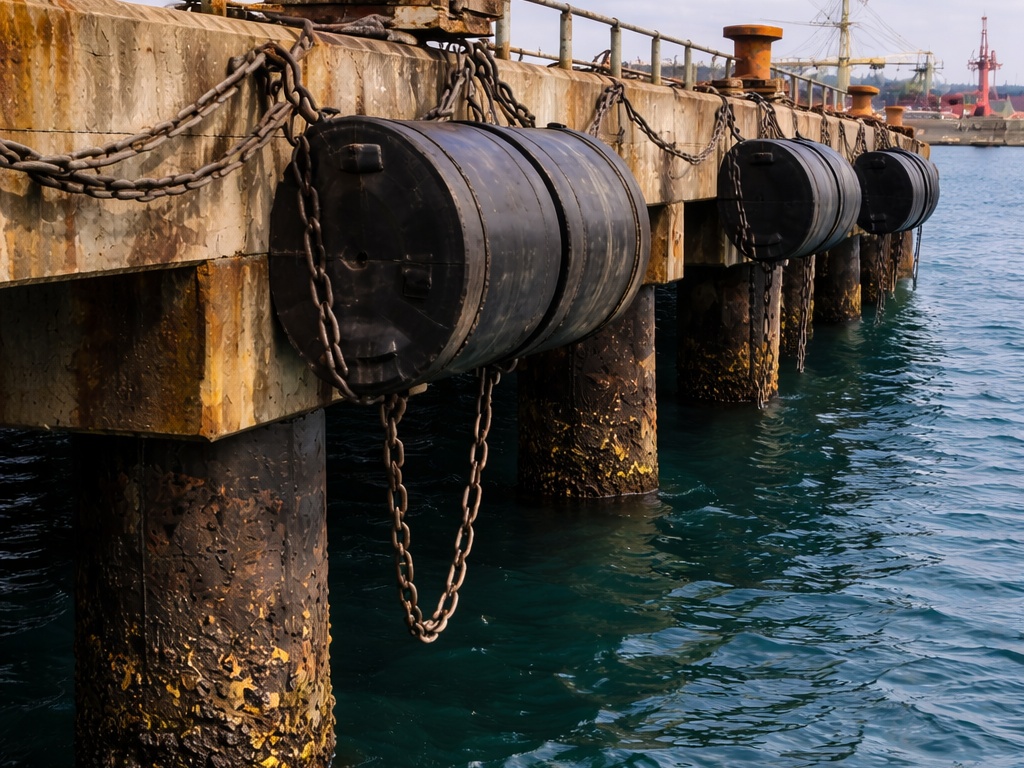
We operate in tidal zones, confined spaces, and submerged conditions, with specialized access, diving, and safety systems.VSL marine expert insights
Our engineers don’t just inspect, they understand structure behavior and deterioration mechanisms specific to marine settings and operations.Data that drives action
From condition ratings to repair recommendations and digital models, we deliver results that inform effective asset management.
FAQ about marine structure inspection
Visual inspections are recommended at least every 1-2 years, with detailed NDT every 5-6 years or after major events (storms, collisions, etc.).
Yes. We use divers, ROVs, and specialized tools for submerged elements like piles, caissons, and quay walls.
Visible cracking, spalling, rust stains, or operational issues (misaligned elements) are red flags, but many critical issues remain invisible without testing.