

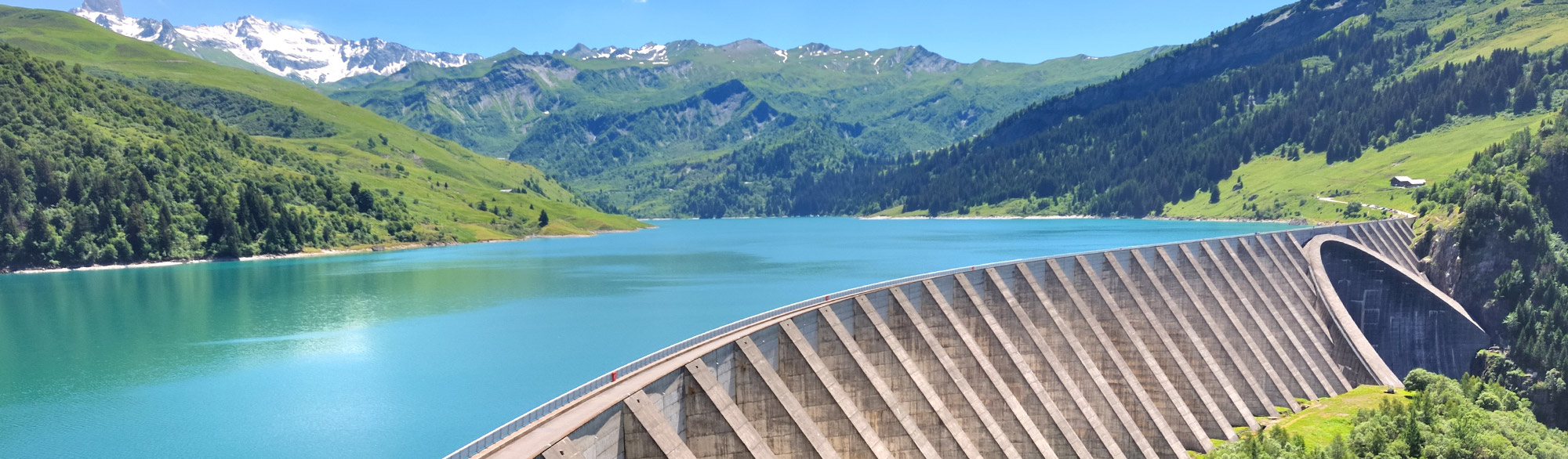
Cut-off walls for Dams
A mechanical barrier to pollution migration
Dams are critical infrastructure assets that must remain watertight and structurally stable over decades of service. One of the most significant risks to dam integrity is water seepage through or beneath the foundation. Cut-off walls provide a proven barrier solution to control seepage, prevent piping, and enhance overall dam safety. VSL designs and constructs cut-off walls tailored to each dam’s geological context, whether for new builds or rehabilitation works.
The role of cut-off walls in dams
A cut-off wall reduces water flow through permeable soils or fractured rock and helps maintain hydraulic stability.
Lower hydraulic gradients within the foundation limit the development of internal erosion and protect dam integrity.
A cut-off wall reinforces existing foundations during rehabilitation works or reservoir-capacity increases where new hydraulic conditions appear.
Improved dam safety in accordance with international dam-engineering standards.
VSL selects diaphragm walls, slurry trenches, or grouted cut-off curtains according to soil conditions, seepage behaviour, and construction constraints.
VSL Design & Build capabilities for cut-off walls
VSL provides complete cut-off wall solutions tailored to each dam’s geological and hydraulic conditions. Our services cover investigation, design, execution, and quality control to ensure safe and durable performance.
Feasibility and geotechnical assessment
Design and material engineering
Construction of the cut-off wall
Quality control and validation
Why choose VSL for deck construction?
Specialized experience
In hydraulic structures and critical dam infrastructureIntegrated capabilities
Combining civil, geotechnical, and structural designAdaptable technologies
Selected for variable foundation conditions and tight construction windowsGlobal presence, local know-how
Track record on multi-stage dam safety programs
FAQ about Cut-off walls
Yes. VSL specializes in retrofit techniques and phased execution that minimize disruption to dam operations and reservoir levels.
Through permeability testing, trench stability monitoring, and continuous verticality control during execution.