

Internal post-tensioning for buildings
VSL’s post-tensioning systems improve building performance with long spans, thinner slabs, and faster construction. Used in slabs, beams, walls, and raft foundations, they ensure durability and cost efficiency. Compared with reinforced concrete slabs, VSL post-tensioned slabs cut thickness by about 32%, saving 30–35% concrete, 40–50% steel, and reducing CO₂ emissions. VSL delivers complete design and installation services through certified teams.
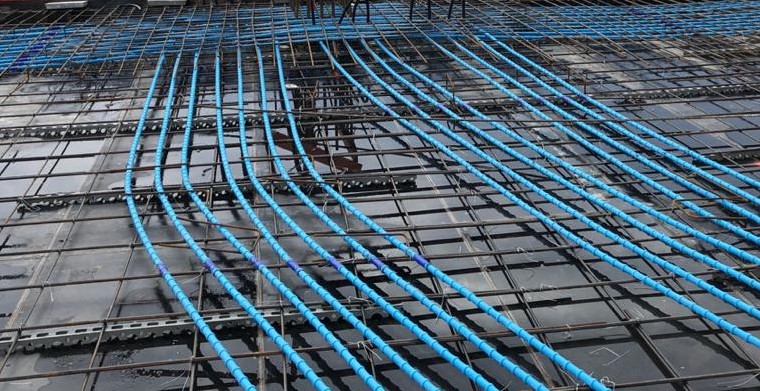
Why choose VSL internal post-tensioning system
- VSL design in post-tension slabs enables an optimal use of materials with significant reductions in concrete and steel consumptions
- Over 60 years of experience in post-tensioning, with global execution capabilities
- Compact, building-optimized systems for slabs, beams, and vertical elements
- Certified post-tensioning systems compliant with European Technical Assessment (ETA)
- End-to-end support: engineering, supply, and certified installation teams
Key features

Applications
VSL internal post‑tensioning systems are used in:
- Flat solid, flat voided and flat ribbed slabs. Slabs with drop panels, drop beams and slabs with beams.
- Transfer slabs, beams, shear walls, and cores
- Commercial, residential, industrial, transport stations, educational, parking, healthcare buildings, …
- Raft slabs or ground-bearing slabs in high-rise or poor-soil conditions
- Complex layouts requiring curved or inclined tendons
Design and performance
| Type | System | Description | Typical Applications | Span / Capacity |
| Monostrand | S6-1 standard and S6-1 Plus | Bonded | Slabs in buildings and car parks | Typical spans for regular loads:
|
| VSLab S | Bonded flat ducts with 2–5 strands | Slabs in buildings and car parks | Same as above | |
| Multistrand | Type E Systems | 3–19 strands in corrugated galvanized ducts, bonded with VSL-HPI grout | Transfer beams, thick slabs, structural cores, shear walls, vertical tendons for cores/lift shafts | Higher prestressing forces, compact anchorages for congested reinforcement |

Accessories
- Flat Corrugated steel and plastic ducts for bonded tendons
- High-quality PE sheathing and grease for unbonded strands
- Compact anchor caps—temporary or permanent
- Tendon couplers for staged construction if required and according configurations

End-to-end services
- Delivered by VSL-certified teams trained at the VSL Academy
- Mobile, lightweight equipment adapted to tight building sites
- All operations in compliance with EN 445–447 and ISO 14824
- Assistance with detailing, logistics planning, and construction sequencing
- BIM integration and quality control throughout execution
Carbon impact
VSL’s slab post-tensioning systems reduce concrete and steel volumes, lowering the embodied carbon of building structures. The S6-1 Plus anchorage system achieves a GWP of 2.4–2.8 kg CO₂e. Bonded systems using corrugated steel ducts and cementitious grout ensure efficient material profiles.
EPDs are available for anchorages and monostrands, while ducts and grout vary by supplier or project.
Need to integrate our technologies into your BIM model?
Explore our BIM Library and Technical Resources Hub!
More than just a collection of BIM-ready files, it’s a simple platform designed to support your technology selection and configuration choices.
Discover even more value in our Hub:
- Technical catalogues
- 400+ technical studies
- Expert webinars to support your projects with high-quality educational content.
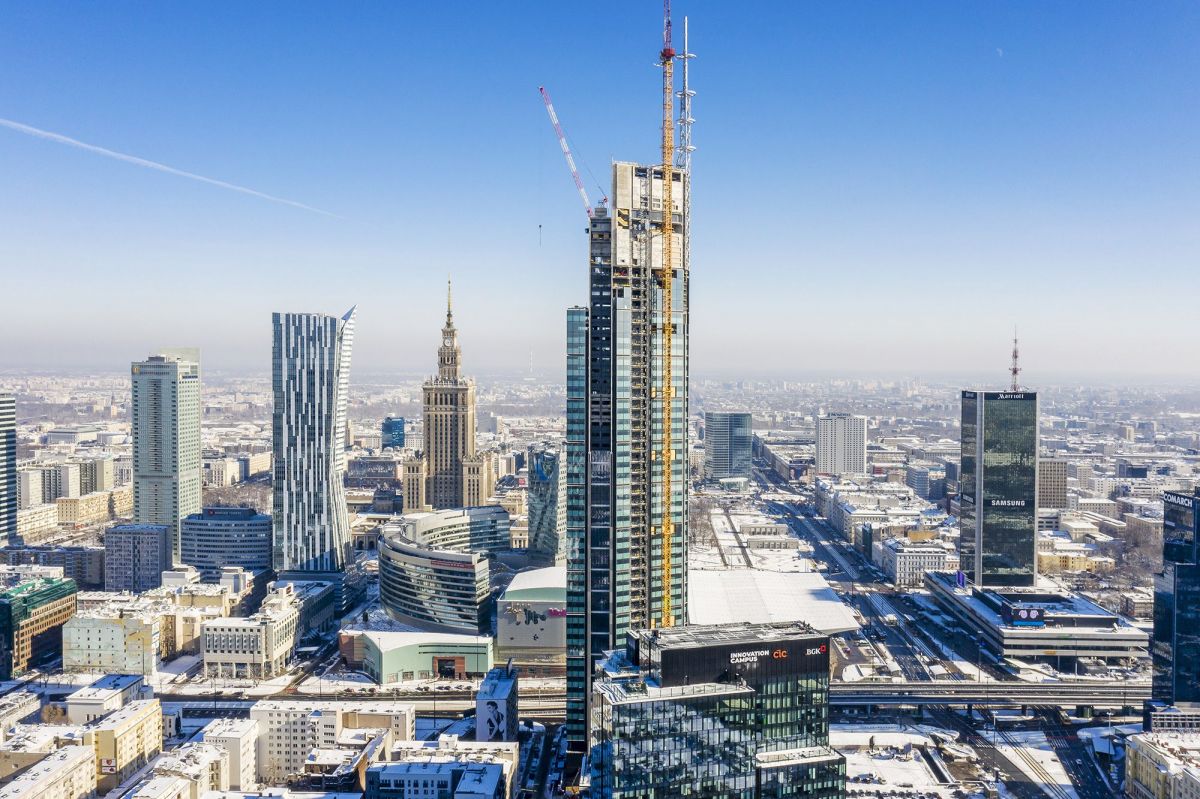
Key benefits
- Longer spans and fewer columns: greater architectural flexibility
- Reduced slab thickness: enables more floors within the same building height
- Better control of deformations thanks to cracking elimination or a better crack control. Addicional effect enhancing durability and long-term watertightness
- Faster construction cycles: early load transfer reduces propping durations
- Lower material use: reduces embodied carbon through efficient design
FAQ about internal post-tensioning for buildings
VSLab S and S6-1monostrand bonded systems are both ideal for most slabs; For specific applications where unbonded systems are required S6-1 Plus using monostrand can be suitably proposed.
It enables early load transfer, allowing formwork removal and cycling in as little as five days.
Yes. All systems are ETA-certified and comply with EN standards for performance and safety.
By reducing material quantities and using efficient, low-carbon construction techniques.