

VSL Memory®-Steel
VSL Memory®-Steel is an active strengthening solution for existing concrete and masonry structures. Based on a shape memory alloy, the system generates prestressing force after heating, enabling immediate load-bearing action. Integrated with repair mortars and rehabilitation works, it improves structural performance, reduces cracking and deflections, and extends service life.
Why choose VSL Memory®-Steel
VSL Memory®-Steel is designed for repair, strengthening, and preservation of existing structures. Unlike passive systems, it introduces an active prestressing effect, improving structural behavior immediately after installation.
It complements established technologies such as:
- external post-tensioning
- passive reinforcement
- CFRP reinforcements
This makes it particularly effective in rehabilitation projects where structural performance must be restored while minimizing intervention.
Key features

What is VSL Memory®-Steel?
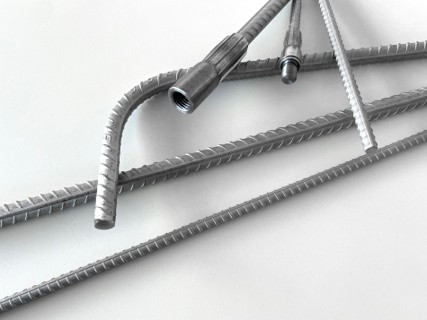
VSL Memory®-Steel is a shape memory alloy rebar system designed for the strengthening of concrete and masonry structures.
After being pre-strained in the factory, the material “remembers” its original shape. When heated on site, it attempts to recover this shape, generating an active prestressing force within the structure.
Unlike passive strengthening solutions, VSL Memory®-Steel introduces prestress immediately after activation, improving structural behavior without requiring additional deformation.
Characteristics
Active prestressing mechanism
- Pre-strained rebar activated by heating
- Shape recovery generates prestressing force
- No external jacking or stressing equipment required
Fully bonded system
- Embedded in repair mortar
- Bonded to the existing structure
- Force transfer into the healthy core concrete
System components
- Pre-strained ribbed Memory®-Steel bars (typically Ø10 and Ø16)
- Mechanical couplers for assembling continuous lengths
- Anchorage solutions, including bonded anchorage and end hooks
- Repair mortars (R3 / R4 class) ensuring bond and required corrosion & fire protection
Material behavior
- High ductility (>10% elongation at break)
- Steel-like behavior after activation
- Compatible with reinforced concrete systems
Adaptability to structural configurations
- Installation in grooves or near-surface mounted applications
- Suitable for flexural, shear, or confinement strengthening
- Adaptable anchorage depending on geometry and substrate

Applications
VSL Memory®-Steel is suitable for a wide range of structures and strengthening scenarios.
Concrete structures
- Flexural strengthening of slabs and beams
- Shear strengthening of girders
- Punching shear strengthening
- Strengthening around new openings
- Load capacity upgrades
Bridge and infrastructure
- Bridge decks and beams
- Water channels and marine structures
- Ageing infrastructure rehabilitation
Buildings and industrial structures
- Slabs and ceilings
- Parking garages
- Silos and industrial facilities
Masonry structures
- Seismic strengthening
- Wall reinforcement
- Vertical load introduction for improved stability

Design and performance
VSL Memory®-Steel introduces a distributed prestressing effect within the structure.
Mechanical principle
- Pre-strained rebar is installed and anchored
- Heating activates the shape memory effect
- The restrained contraction generates prestress
Structural impact
- Increased load-bearing capacity
- Reduced cracking and deflections
- Improved stress distribution
- Enhanced use of existing reinforcement and concrete
Long-term behavior
The system behaves similarly to conventional steel once installed, with durability ensured through:
- proper anchorage
- adequate mortar cover
- controlled installation procedures
Installation approach
VSL Memory®-Steel is implemented as part of a controlled strengthening and repair process, combining:
- surface preparation,
- installation of pre-strained bars,
- activation by heating,
- and final protection with repair mortar.
This approach ensures full integration of the strengthening system into the existing structure, with forces transferred into the undamaged core concrete.

End-to-end services
VSL delivers Memory®-Steel solutions through a fully integrated approach, from assessment to long-term performance.
Engineering and design
- Structural assessment and diagnostics
- Feasibility studies and strengthening strategy
- Design of project-specific solutions
Supply and installation
- Supply of proprietary Memory®-Steel systems
- Installation by VSL-trained teams
- Adaptation to site constraints and existing structures
Quality control and execution
- Verification of substrate condition and anchorage zones
- Controlled activation with temperature monitoring
- Documented installation procedures and protocols
Post-completion support
- Performance monitoring and follow-up
- Maintenance strategies and lifecycle optimization
VSL combines global engineering expertise with local execution capabilities to ensure reliable, safe, and durable strengthening solutions.

Carbon emissions
VSL Memory®-Steel supports low-carbon infrastructure strategies by prioritizing rehabilitation over replacement.
Lower carbon impact through preservation
- Avoids demolition and reconstruction, reducing material use and associated emissions
- Extends the service life of existing structures through targeted strengthening
Sustainable materials and approach
- 100% recyclable material
- Optimized use of resources through minimal intervention and near-surface installation
By strengthening rather than replacing structures, VSL Memory®-Steel contributes to more efficient and sustainable infrastructure management.
Key benefits
VSL Memory®-Steel introduces prestressing immediately after activation, without requiring additional structural deformation. This enables efficient strengthening even in structures with limited residual capacity.
- Reduced deflections
- Crack control or closure
- Improved structural behavior under service loads
By reducing internal stresses in existing reinforcement and limiting crack development, the system contributes to extending the service life of structures.
The high ductility of the material enables redistribution of forces and enhances structural resilience, particularly in demanding or seismic conditions.
Embedded in repair mortar, the system benefits from:
- Protection against corrosion
- Fire resistance in accordance with concrete cover requirements
- Protection against mechanical damage
The near-surface installation and slim profile limit the impact on existing geometry and allow efficient strengthening with minimal additional thickness.
VSL Memory®-Steel can be combined with:
- FRP reinforcements
- Conventional post-tensioning systems
This allows engineers to tailor strengthening solutions to project-specific constraints.
FAQ about strengthening for concrete and masonry structures
It is an active system that introduces prestress, unlike passive solutions that rely on structural deformation.
Concrete and masonry structures, including bridges, buildings, slabs, and walls.
Heating is controlled and adapted to project conditions, with alternative methods such as electrical activation when required.
By embedding the rebar in repair mortar, ensuring durability and protection against corrosion and fire.
Yes, including FRP reinforcements and post-tensioning systems.