

Post-tensioning
VSL provides post-tensioning and prestressing solutions to optimise concrete structures, improve durability and support efficient construction. From bridges and buildings to industrial structures and asset strengthening, VSL combines proprietary systems, specialist engineering and reliable site execution.
Engineering lighter, stronger and more durable concrete structures.
Post-tensioning is one of VSL’s historical core capabilities. It strengthens concrete by applying controlled compression through high-strength steel strands or bars, helping structures resist loads, control cracking and limit deflections. VSL supports designers, contractors, developers and infrastructure owners from early design assistance to site execution and lifecycle support, helping define the most appropriate prestressing strategy for each structure.
Where post-tensioning expertise applies
Our solutions
Bar prestressing systems
Why post-tensioning matters
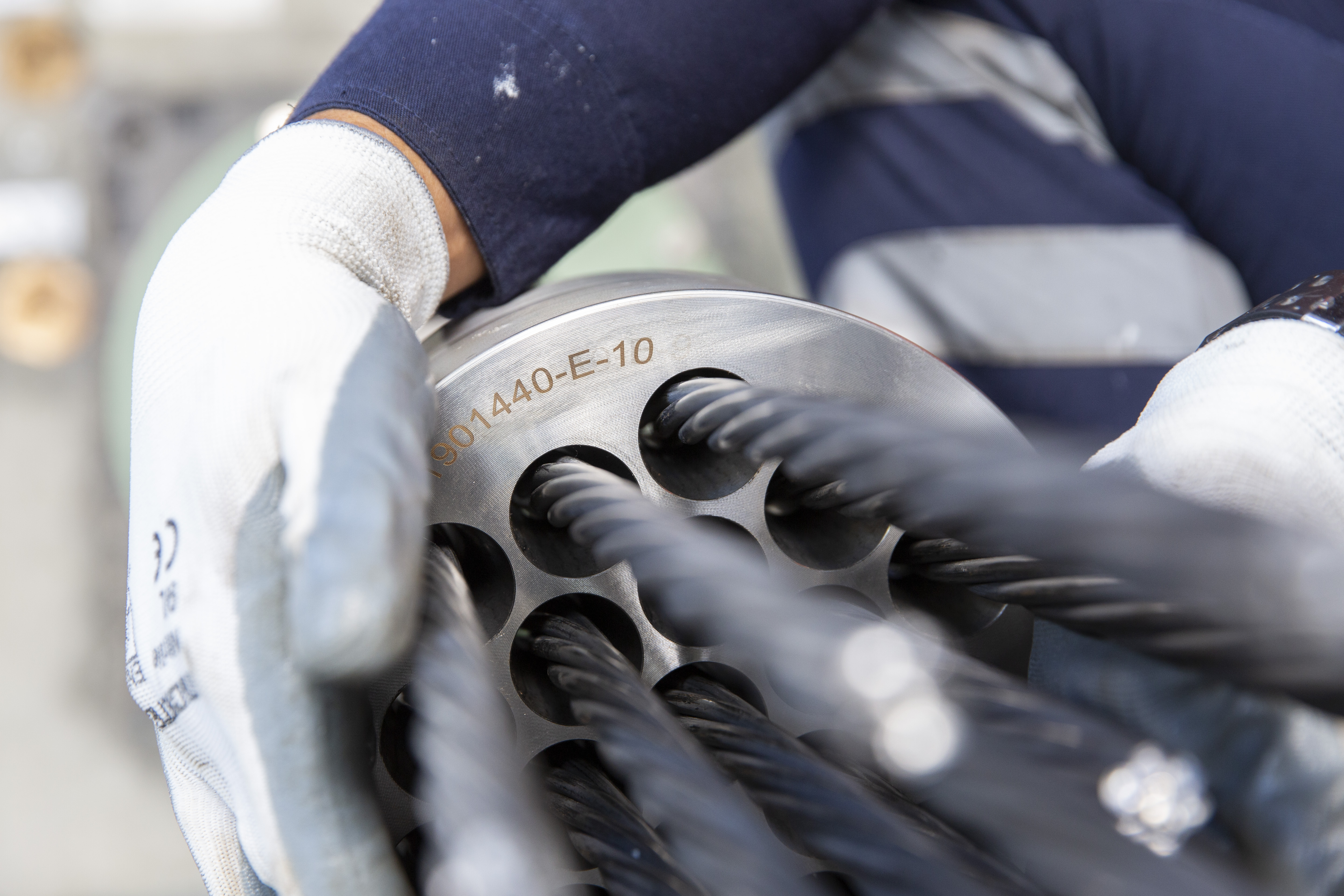
Structural efficiency
Longer spans, thinner decks or slabs, reduced material quantities.Crack and deflection control
Improved serviceability and durability.Design freedom
More open spaces, lighter structures and optimised layouts.Construction optimisation
Efficient sequences and improved buildability.Lifecycle performance
Strengthening, repair and asset life extension.Lower material impact
Leaner concrete sections and reduced reinforcement, depending on design and context.
WHY CHOOSE VSL FOR POST-TENSIONING?
Post-tensioning is one of VSL’s core areas of expertise, supported by decades of experience across bridges, buildings, slabs, tanks, special structures and repair works.
VSL supports projects from feasibility, value engineering and method engineering to system supply, installation, stressing, grouting and quality control.
VSL supports both new construction and asset upgrading, including external post-tensioning, additional prestressing, tendon replacement and strengthening strategies.
With teams operating in many countries, VSL combines local project delivery with international technical support and experience across multiple structure types.
FREQUENTLY ASKED QUESTIONS ABOUT POST-TENSIONING
Post-tensioning is a construction technique used to strengthen concrete structures. High-strength steel strands or bars are placed inside or outside the concrete and then tensioned to introduce a controlled compressive force. This helps control cracking, reduce deflections, improve durability and allow more efficient structures, such as longer spans or thinner slabs.
Prestressing is the general principle of applying compression to concrete. Post-tensioning is one method of prestressing, where tendons are tensioned after the concrete has gained sufficient strength.
Internal post-tensioning places tendons inside the concrete section, usually within ducts. External post-tensioning places tendons outside the concrete section, often for bridges, strengthening works or applications requiring easier inspection.
External tendons are easier to inspect, maintain and, when designed accordingly, replace. They can improve structural capacity, control deflections and extend the service life of bridges with limited disruption.
VSL’s new-generation XT-series goes further by using mechanically independent, individually protected strands, improving durability, inspectability and maintainability compared with legacy grouted bare strand systems.
Yes. External post-tensioning and additional prestressing can increase load capacity, control deflections and extend service life.
Post-tensioning can contribute to lower embodied carbon by reducing material quantities and enabling more efficient structural designs. It can also support asset life extension through repair and strengthening, helping avoid unnecessary demolition and reconstruction.
Post-tensioning systems are designed for long-term performance when properly designed, installed, stressed and protected. Durability depends on the system selection, corrosion protection strategy, quality of installation and compliance with project specifications.
This depends on the type of system and the structure design. External post-tensioning systems can offer easier access for inspection and, in some cases, replacement. VSL can support owners and engineers in assessing existing structures and defining suitable maintenance or replacement strategies.
Yes. External tendons can be monitored, depending on the system and the structure. VSL’s new-generation XT-series was designed precisely to improve inspectability, monitoring and maintainability. Unlike legacy grouted bare strand systems, the XT-series uses mechanically independent, individually protected strands, helping make potential issues more detectable and supporting planned maintenance rather than emergency response.